Or how to enjoy fume free driving…
I have a slight problem with the 924 S and a smell of petrol in the cabin. I bought a spare fuel tank to swap out for the one in the car and hopefully fix the problem, both are detailed in ‘Great Balls of Fire‘ and ‘The fuel tank conundrum!‘ respectively.
While I had a spare fuel tank to fit to the 924 S which looked to be in reasonable condition I was a little reluctant to fit it to the car as is given the experience to date:
- the original fuel tank on the car leaked
- a replacement 924 S fuel tank supplied and fitted leaked
- a 924 2.0 NA tank supplied by me hasn’t leaked but there’s a strong smell of fumes
Definitely only wanting to go through the rigmarole of fitting the tank once I decided to give it a full refurb. Checking around most people suggested welding, but that would only really remedy obvious holes and not necessarily hairline cracks in the top of the tank which reportedly cause a similar fumes problem. Aside from the fact that I can’t weld there is also the issue of petrol fumes and a possible tank explosion, which filling it with water can work around.
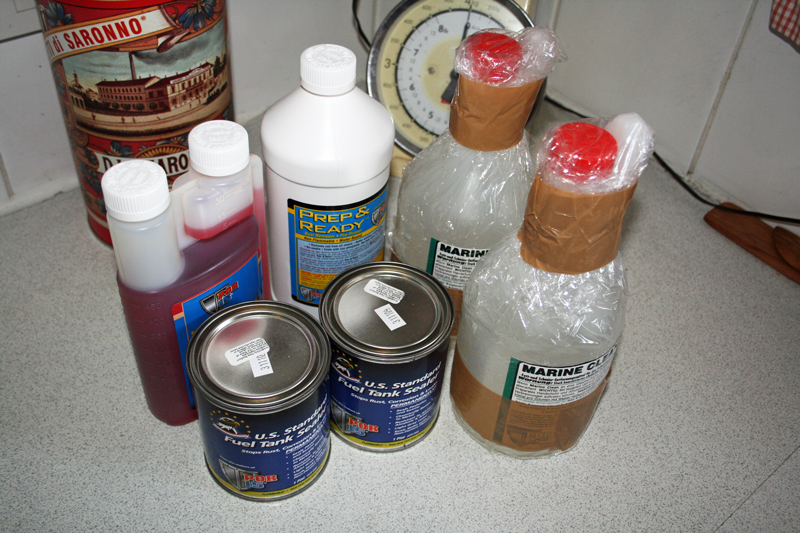
A little more research and I found a product called POR-15 Tank sealer, a chemical solution to the leaking tank problem, that I thought I could use! I was warned to be careful using it with tanks with a mesh inside to prevent contaminants from getting into the fuel system, which the sealer could block. To check the tank I pushed a length of wire into each opening to make sure if passed through unobstructed, it did. Go time.
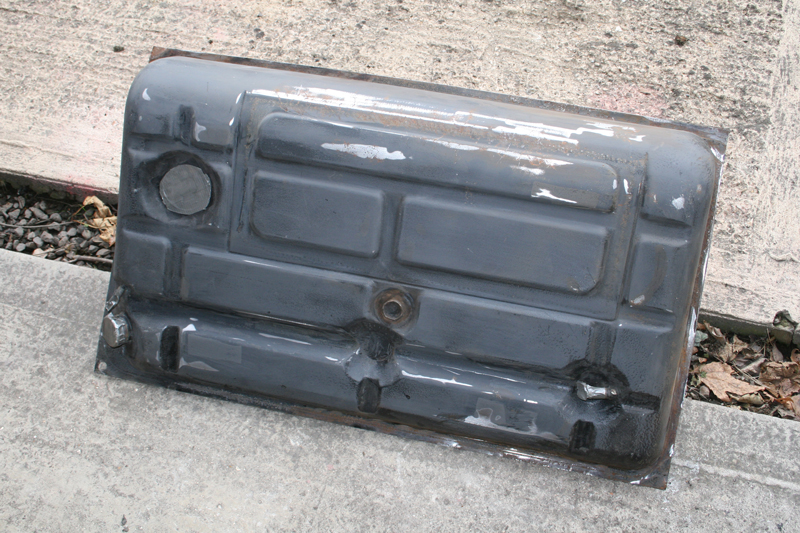
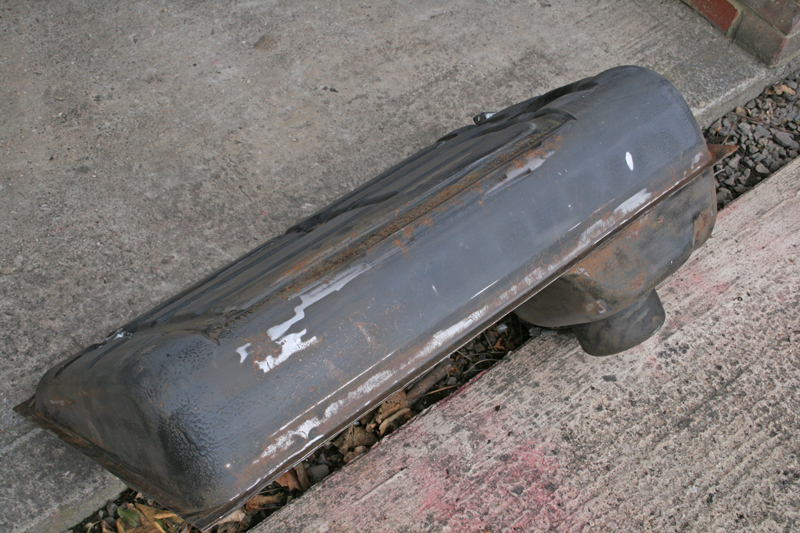
Somewhat unnecessarily I had cleaned the tank when I first collected I; this wasn’t entirely in vain as it did allow me to check the condition of the outside before I started…. basically, was it a lost cause? Results were actually rather good.
Before I began with the treatment to line the inside of the tank I decided to give the outside I thorough clean up with wire brushes, wire wool and various spinning disks. I wanted to get this done before the treatment went in as I was concerned that the virbrations may work loose the newly applied sealer. This is most likely me being overly cautious [again] but it wasn’t going to hurt to do it this way.
While I didn’t think the tank sealer was going to be easy, I didn’t quite appreciate what hard work it would be, however there is nothing technically difficult involved. In short the process is:
- Chemically clean the inside of the tank with; add the cleaner to the tank, seal the tank and roll it for at least 20 minutes. That thing is steel and feels rather heavy after even 5 minutes! Rinse.


- Hate to say this, but repeat the above!
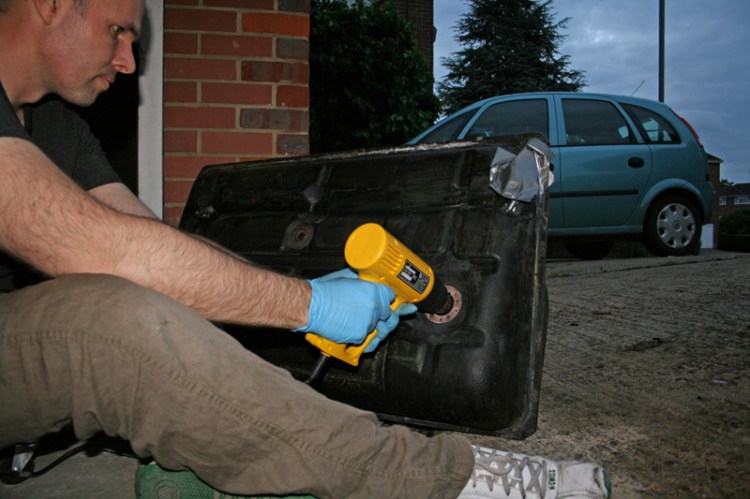
- Dry the tank, a bit, doesn’t need to be bone dry. Treat with a metal prep, to ready any internal rust areas for the sealer. Thankfully this involved soaking a panel and then moving onto another. Empty and dry – I tried with a hot air gun, but ended up having to leave over night – ideally the next stage would be done soon after the above.
- Pour in the tank sealer and roll the tank around to coat every panel inside.

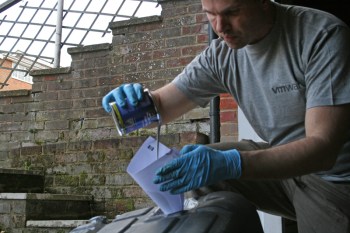
I took my time over this as I didn’t want any patches. Empty the excess sealer, which was a pig of a job – the sealer is quite thick and takes and age to run to the filler hole, then the lip on the inside of the filler hole makes it very difficult to get out.
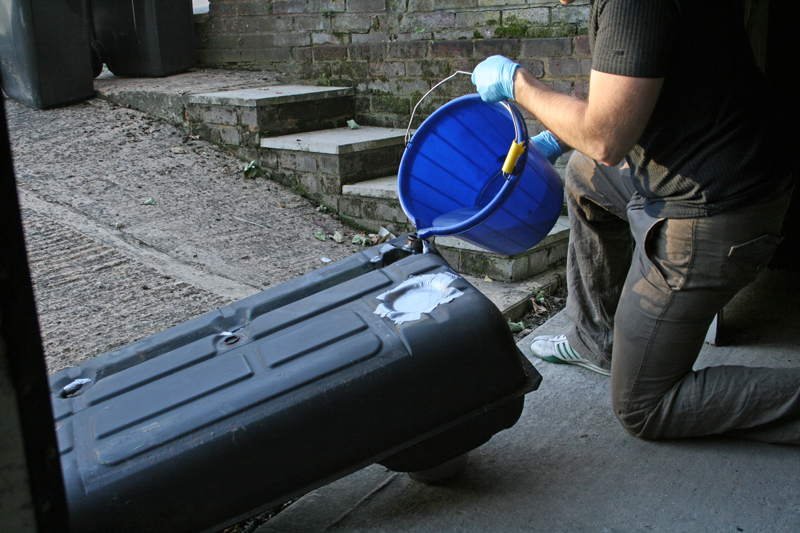
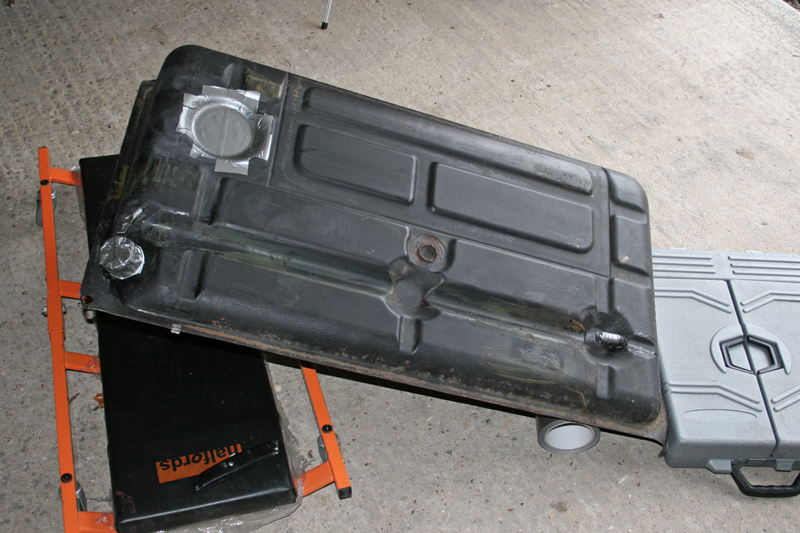
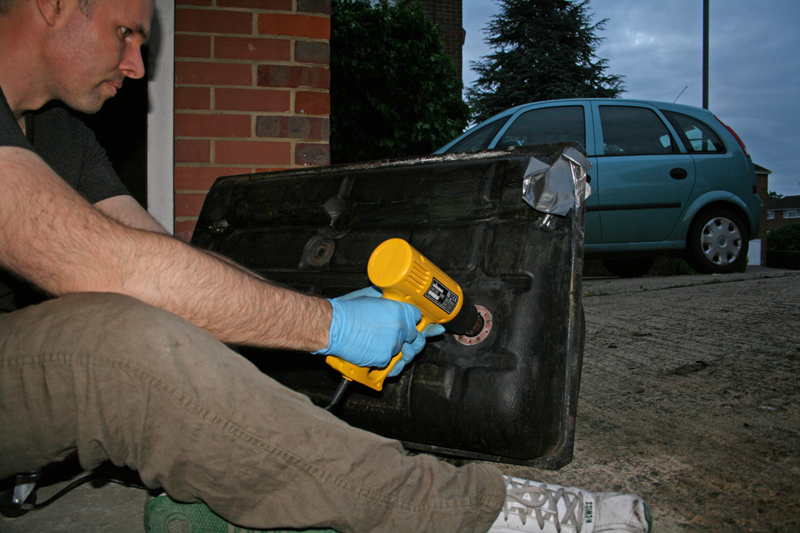
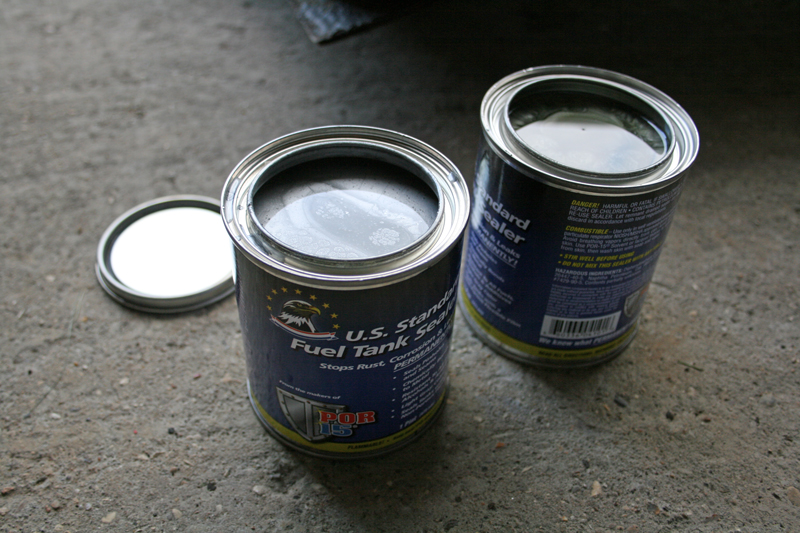
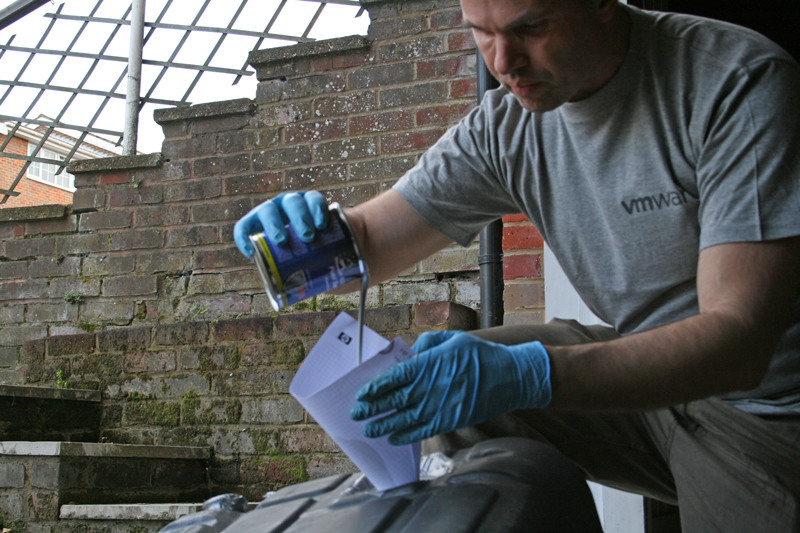
It took a long time but I got there in eventually. As far as I could tell the finish was rather good too – very little pooling!
With the inside of the tank finished I moved to the exterior, which had already had the surface rust removed. This was far easier:
- use a chemical cleaner to remove any surface contaminants; dust, oil and grease.
- cover the exterior with a rust inhibiting petrol proof paint. I put an extra coat over the areas here there has been rust and made sure to get paint into the seams.
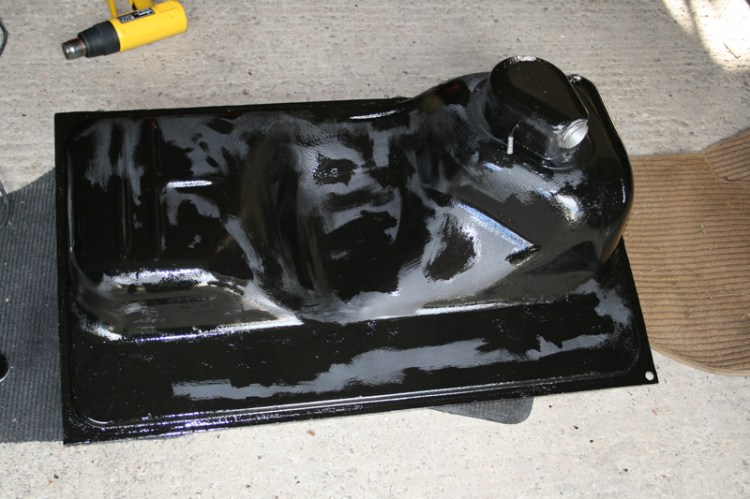
- this was more of an option; when the paint was dry I coated the areas where the straps sit with Plastidip – an aerosol spray-on rubber – to hopefully stop and rubbing / future corrosion.
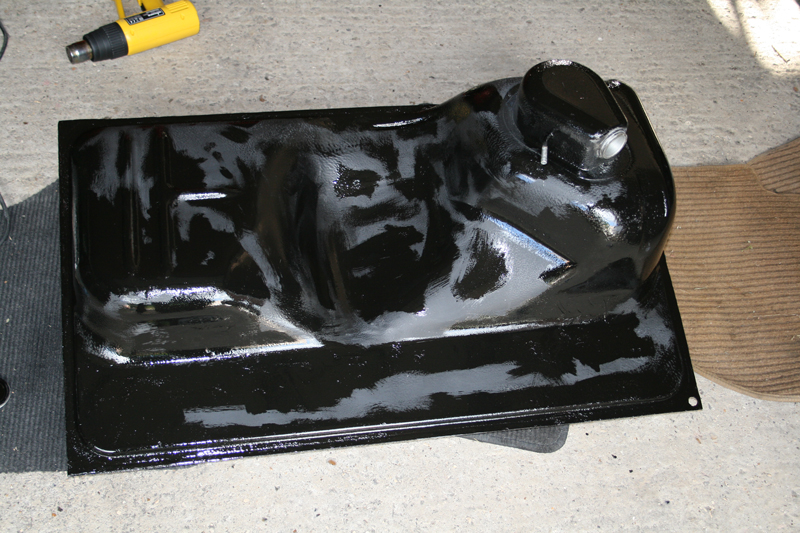
At the end of all this I had a nice shiny looking tank which was probably as good as a new one, if not better. Was it worth it? In retrospect this coating the inside of the tank was probably overkill and just doing the outside would have sufficed, but it’s good to have the job done.

Next up, fitting the refurbed tank – the biggest job I’ve undertanken with this car. Or any car for that matter. Write up for fitting: More than just a few bolts!


 #Project924
Reblogged this on The Porsche Independent Repair and commented:
As much as a pain it is to deal with fumes, do so, as for the safety of you and others nearby.
Posted by abauerporsche | October 1, 2012, 12:08 pm